
Our Weekly Newsletter.
Receive our free newsletter once a week, for stories that we cant feature in videos.
The stories are just as good, written.
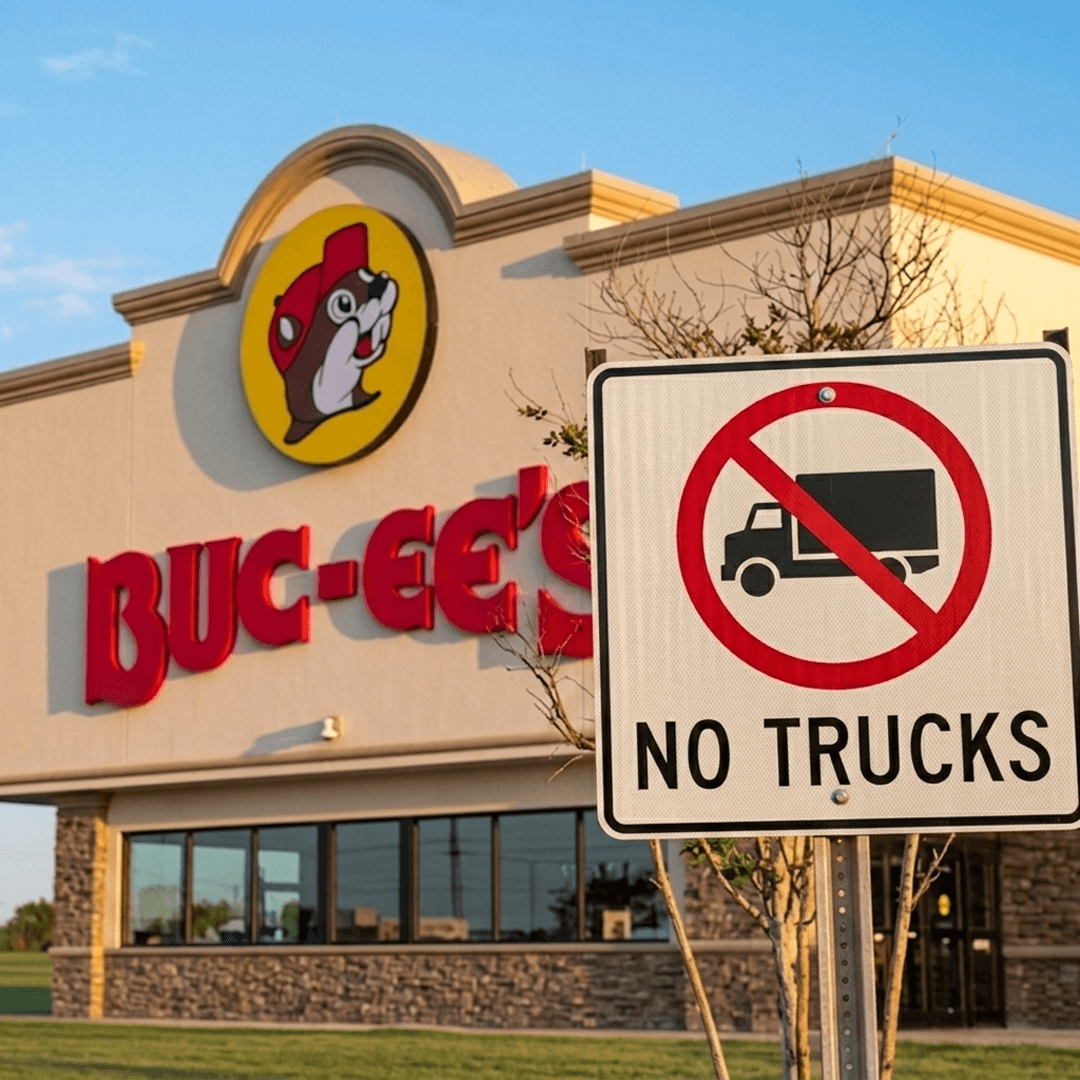
Buc-ee’s explicitly bans commercial semi-trucks across all of its locations. This breaks convention, as most people would assume banning trucks would lead to a huge loss in revenue. For Buc-ee’s, however, it actually had the complete opposite effect.
Truckers don’t spend much money inside gas stations, but regular everyday people traveling across state lines do. They’re the ones stopping for snacks, looking to waste some time, and paying close attention to gas prices (which Buc-ee’s keeps notoriously low).
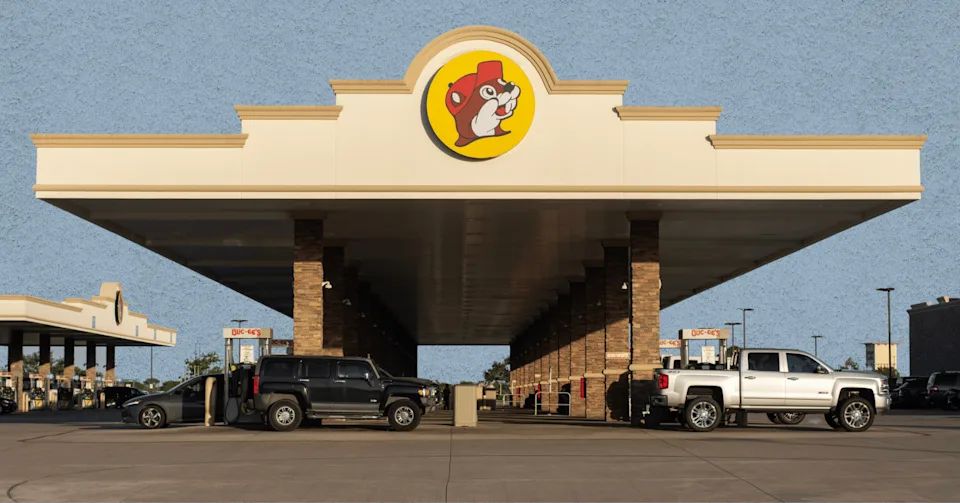
Trucks, by nature, are pretty big, especially those used for transport. They require wide turning radiuses and expansive parking lots to accommodate long-term stays, both of which actively prevent customers from accessing Buc-ee’s, whether by holding up traffic or taking up parking spaces (which also holds up traffic).
By banning truckers, they could allocate more space to gas pumps and car parking, keeping traffic moving smoothly and allowing more customers inside, where the real money is made. This single decision has reportedly made them millions annually, as they were able to increase both foot traffic and the money each customer spent at the same time.

Banning truckers was a deliberate business decision that helped turn Buc-ee’s from a small Texas chain into a multi-billion-dollar giant.
Traditional highway travel centers rely heavily on commercial truckers for fuel sales. However, fuel margins at gas stations are really small, often generating just a few cents per gallon; most of the revenue is made inside the store.
When Buc-ee’s began scaling up its store sizes in 2003, they were able to increase how much the average customer was spending by focusing entirely on vacationers and families. They had already recognised that truckers were not their ideal customer, so now they needed to make sure as many everyday people could access a Buc-ee’s as possible.

Trucks, by nature, are pretty big, especially those used for transport. They require wide turning radiuses and expansive parking lots to accommodate long-term stays, both of which actively prevent customers from accessing Buc-ee’s, whether by holding up traffic or taking up parking spaces (which also holds up traffic).
By banning truckers, they could allocate more space to gas pumps and car parking, keeping traffic moving smoothly and allowing more customers inside, where the real money is made. This single decision has reportedly made them millions annually, as they were able to increase both foot traffic and the money each customer spent at the same time.
Our Weekly Newsletter.
Receive our free newsletter once a week, for stories that we cant
feature in videos. The stories are just as good, written.
Our Weekly Newsletter.
Receive our free newsletter once a week, for stories that we cant feature in videos.
The stories are just as good, written.
Trucks, by nature, are pretty big, especially those used for transport. They require wide turning radiuses and expansive parking lots to accommodate long-term stays, both of which actively prevent customers from accessing Buc-ee’s, whether by holding up traffic or taking up parking spaces (which also holds up traffic).
By banning truckers, they could allocate more space to gas pumps and car parking, keeping traffic moving smoothly and allowing more customers inside, where the real money is made. This single decision has reportedly made them millions annually, as they were able to increase both foot traffic and the money each customer spent at the same time.
Banning truckers was a deliberate business decision that helped turn Buc-ee’s from a small Texas chain into a multi-billion-dollar giant.
Traditional highway travel centers rely heavily on commercial truckers for fuel sales. However, fuel margins at gas stations are really small, often generating just a few cents per gallon; most of the revenue is made inside the store.
When Buc-ee’s began scaling up its store sizes in 2003, they were able to increase how much the average customer was spending by focusing entirely on vacationers and families. They had already recognised that truckers were not their ideal customer, so now they needed to make sure as many everyday people could access a Buc-ee’s as possible.
Buc-ee’s explicitly bans commercial semi-trucks across all of its locations. This breaks convention, as most people would assume banning trucks would lead to a huge loss in revenue. For Buc-ee’s, however, it actually had the complete opposite effect.
Truckers don’t spend much money inside gas stations, but regular everyday people traveling across state lines do. They’re the ones stopping for snacks, looking to waste some time, and paying close attention to gas prices (which Buc-ee’s keeps notoriously low).
Sign Me Up
★ ★ ★ ★ ★
Sign Me Up
Despite most Buc-ees having seemingly endless gas pumps, you will never see a truck use them. Well, unless something has gone seriously wrong.
Despite most Buc-ees having seemingly endless gas pumps, you will never see a truck use them. Well, unless something has gone seriously wrong.
Why Buc-ees Banned
Truck Drivers
Why Buc-ees Banned Truck Drivers
★ ★ ★ ★ ★
Sign Me Up
Despite most Buc-ees having seemingly endless gas pumps, you will never see a truck use them. Well, unless something has gone seriously wrong.
Why Buc-ees Banned
Truck Drivers